
Basement wall and joint work in Rochester
Basement Waterproofing in Rochester, NY calls for a distinction between treating water entry and dealing with a wall condition. Rochester Basement Waterproofing Pros discusses cracks, joints and alignment before a method is selected. The visible line on the masonry is a starting point, not enough information to specify the work.
Read the material and the pattern
Stone, concrete block and poured concrete present different joints and surfaces. A mortar joint that has weathered is not identical to a crack through a poured wall. Describe the material if you know it, the direction of the mark and whether it changes after wet weather.
The assessment should also consider alignment. A wall that appears displaced or bowed may need structural assessment before a repair is chosen. Sealing a water-entry point and restraining a wall serve different functions. The written explanation should make that distinction clear rather than using one broad repair label for both.
Localized water-entry work
Some conditions can be approached at a particular joint or opening after the entry route has been assessed. Depending on the material and condition, work might involve joint preparation, repointing or an appropriate crack treatment. The method should fit the substrate and the intended purpose.
A localized treatment is not an instruction to cover every wall surface. Ask where the proposed work begins and ends, how the opening will be prepared and what remains outside the scope. If water moves along the floor edge as well, a separate collection arrangement may need discussion. That does not make the two methods interchangeable.
When the wall itself needs attention
Horizontal cracking, visible bowing or displaced masonry should not be reduced to a cosmetic mark. An assessment may need to establish whether movement is present and what further structural input is appropriate. This website does not diagnose the wall from its shape or a photograph.
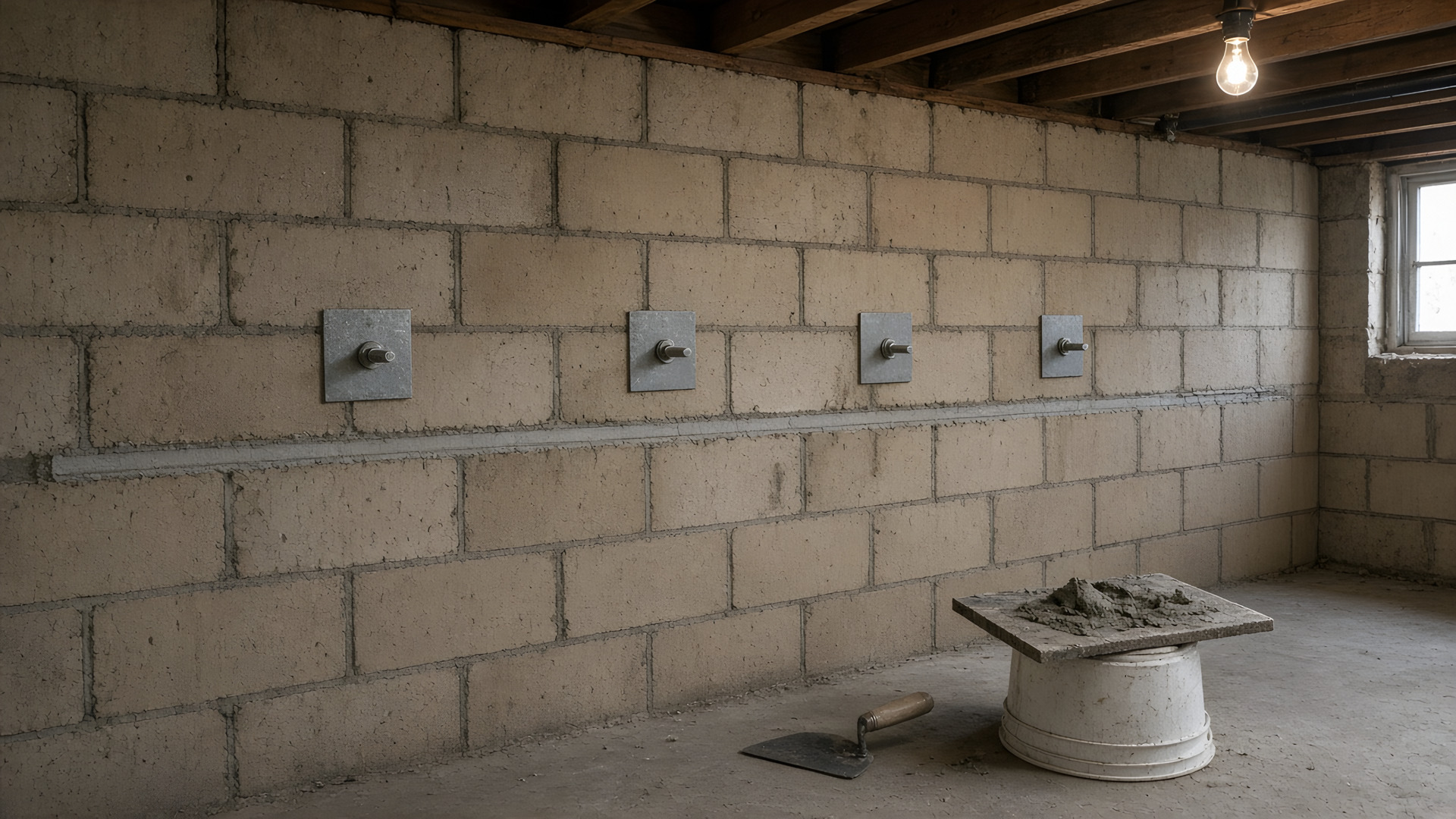
The supplied image includes metal wall plates over a repointed joint. It is illustrative of wall-related work, not a prescription to fit plates at every house. Access, outside conditions, material and the assessment all affect the possible arrangement. Ask how a proposed restraint system differs from any treatment intended to manage water entry.
Inside finishes and outside conditions
A finished basement wall can conceal the foundation behind it. During the call, describe accessible unfinished areas and any visible marks on the finish. The scope should explain what opening or removal may be required to assess or carry out the work, and which restoration responsibilities are included.
Outside the house, roof runoff, window wells and ground levels can help explain moisture at the masonry. They do not prove that a particular indoor mark began directly opposite it. Water can follow joints before becoming visible. Linking observations to the proposed treatment is more useful than assigning a cause from one isolated detail.
Define the work before comparing prices
The length and accessibility of the affected area, the wall material and the purpose of the repair all influence the scope. A joint repair, crack treatment and restraint arrangement are different proposals. Ask for the intended locations, preparation, completion checks and limits to be stated in writing.
Keep dated observations if a mark changes, without attempting to measure structural movement yourself. Call Rochester Basement Waterproofing Pros to explain the wall as it is now and discuss an assessment. You can also read the leaking masonry water-sign page and the perimeter collection page to separate wall questions from floor-edge drainage.
Related Folio Reading
Bring the pattern to the conversation
Tell Rochester Basement Waterproofing Pros where water first appears and when it returns. You can discuss the basement layout, existing equipment and an assessment without choosing a method in advance. Call to check availability.
Calls answered directly. Discuss water patterns, access and next steps for your house.